Holography is a technology; a hologram is its result. Holography records and reconstructs spatial information using the interference of light, and a hologram is the medium that reproduces the resulting three-dimensional image. The word comes from the Greek holos (whole) and gram (message).
How an optical hologram is made
An object is illuminated with laser light, and the interference pattern is recorded onto film. Like a photograph, the film is developed and kept; it can be viewed at any time without additional equipment, showing natural depth from many angles.
Analog and digital
An analog hologram is recorded directly from a real object. A digital hologram is created from 3D data, so it can show images that do not exist in reality.
Korean Cultural Center Washington, D.C. 2370 Massachusetts Ave NW, Washington, DC 20008
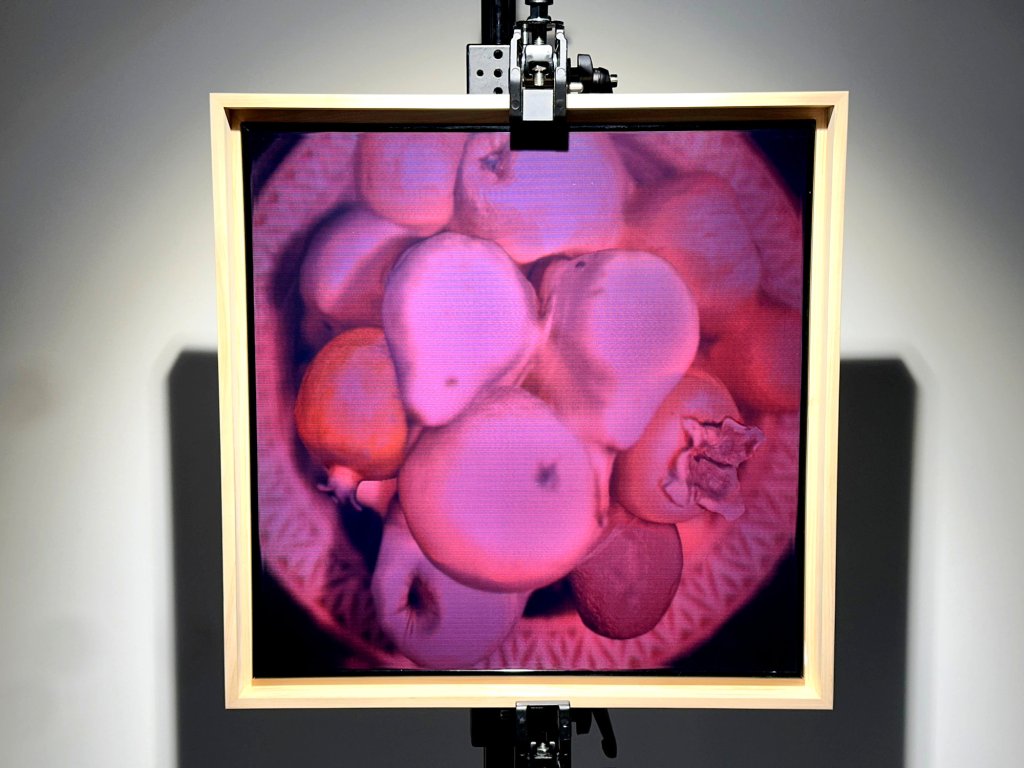
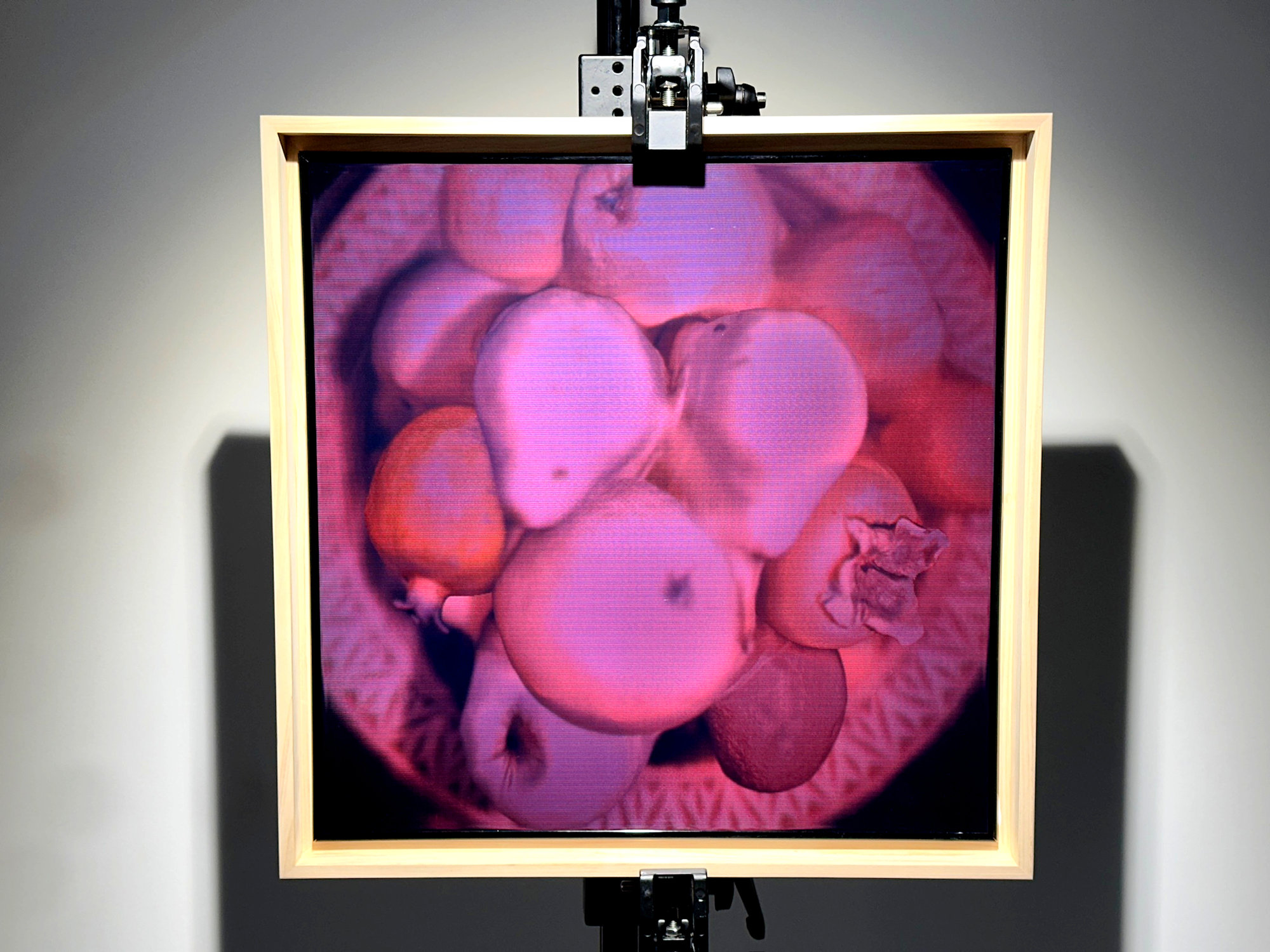
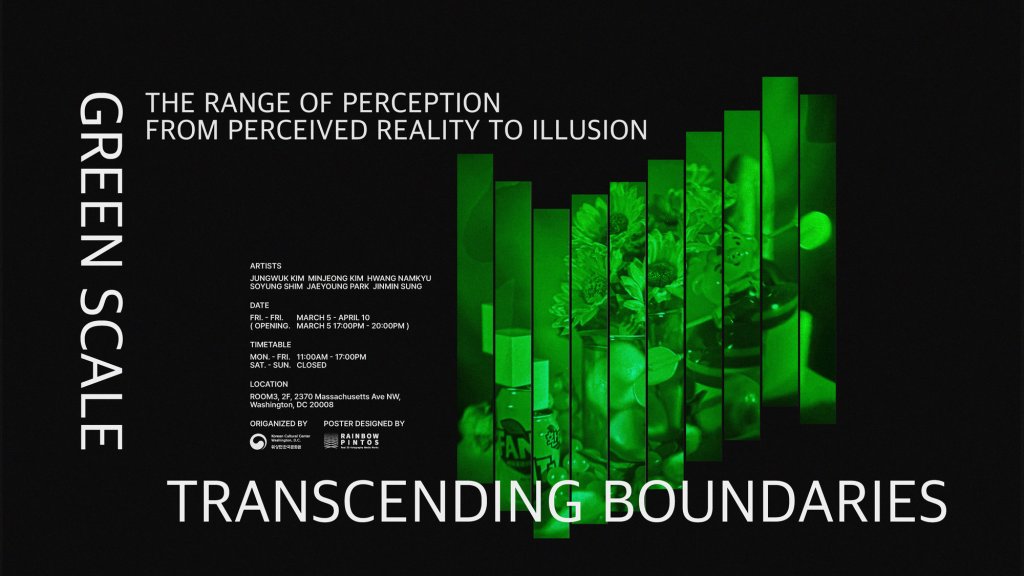
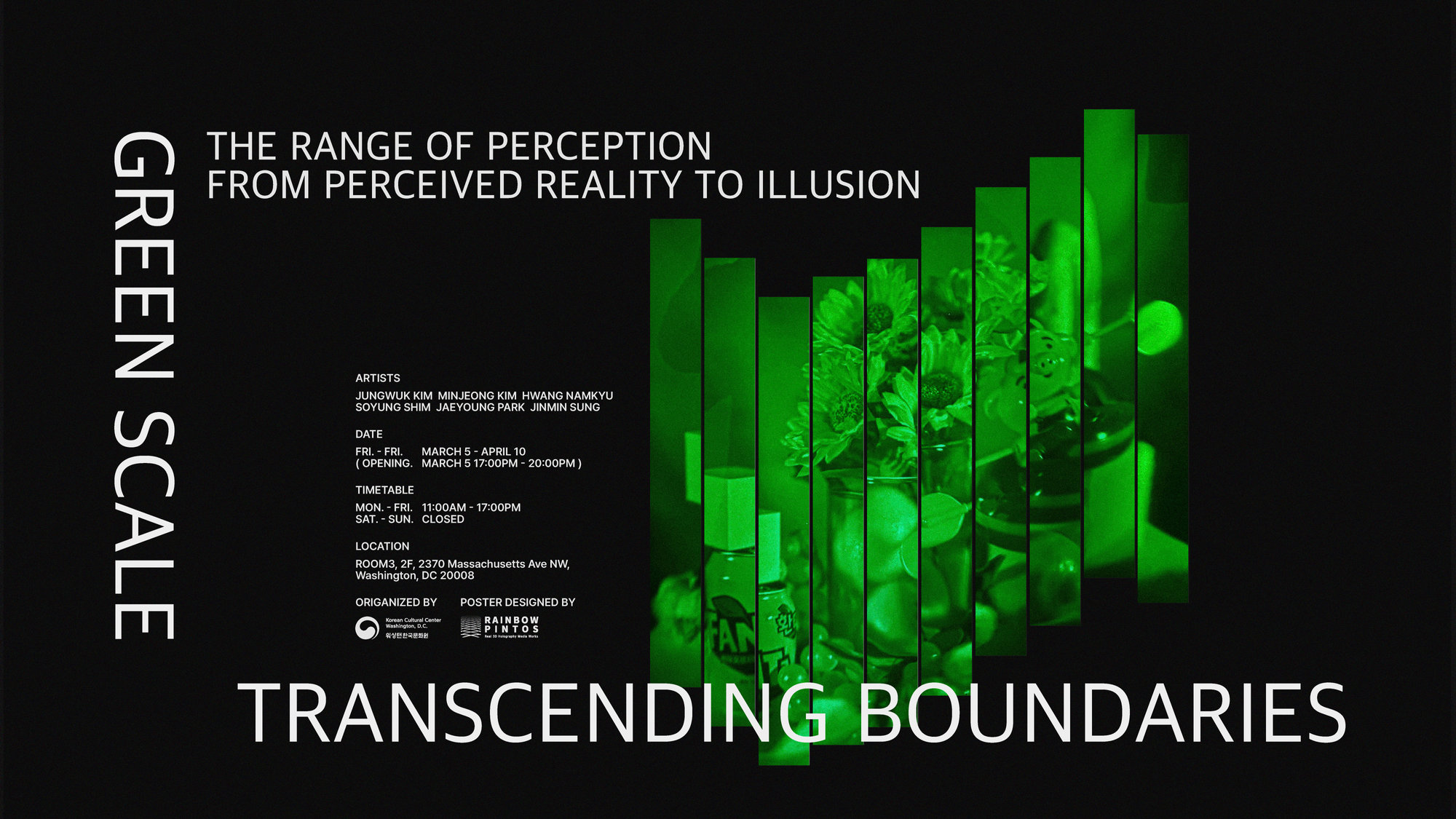
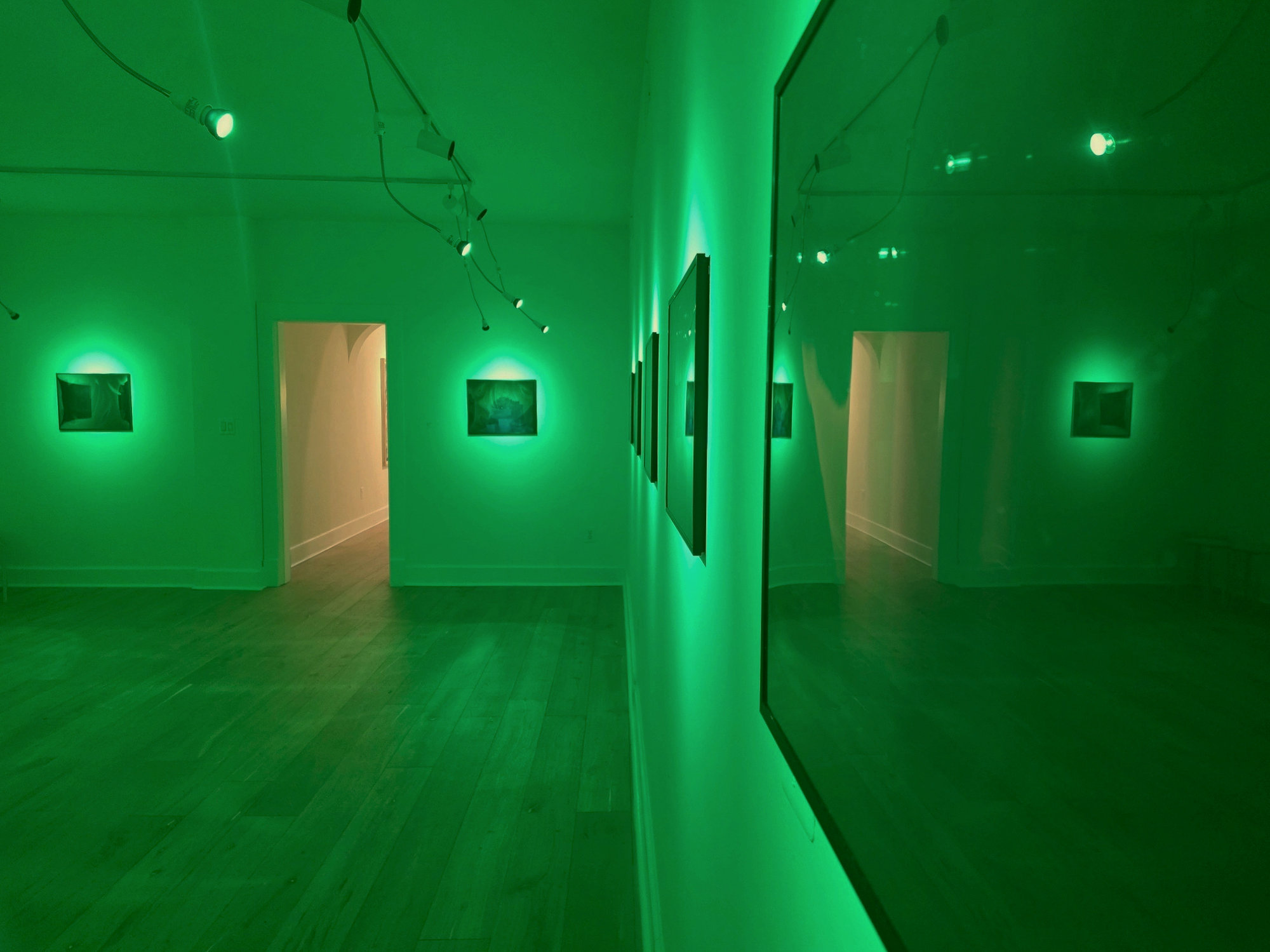
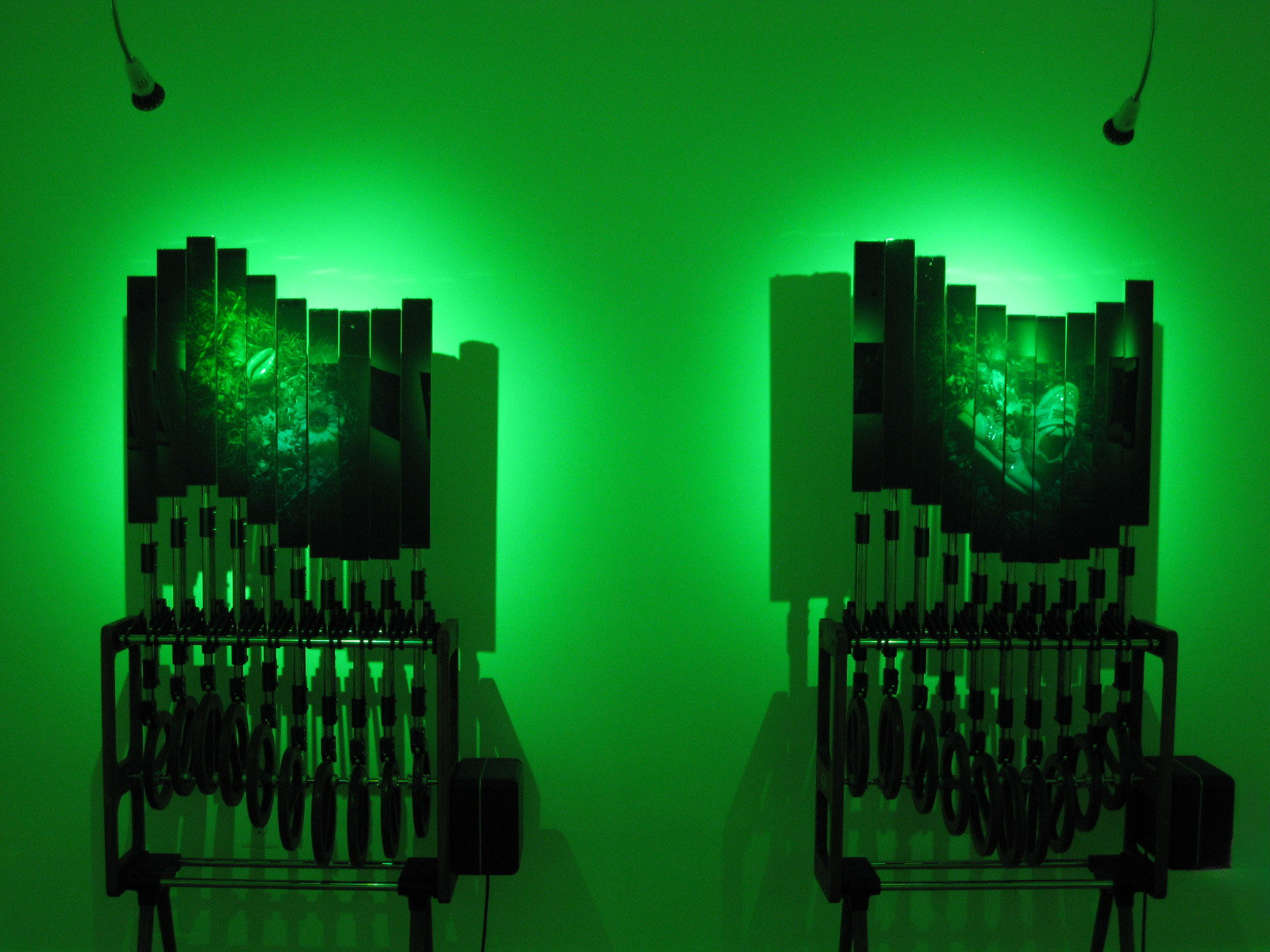
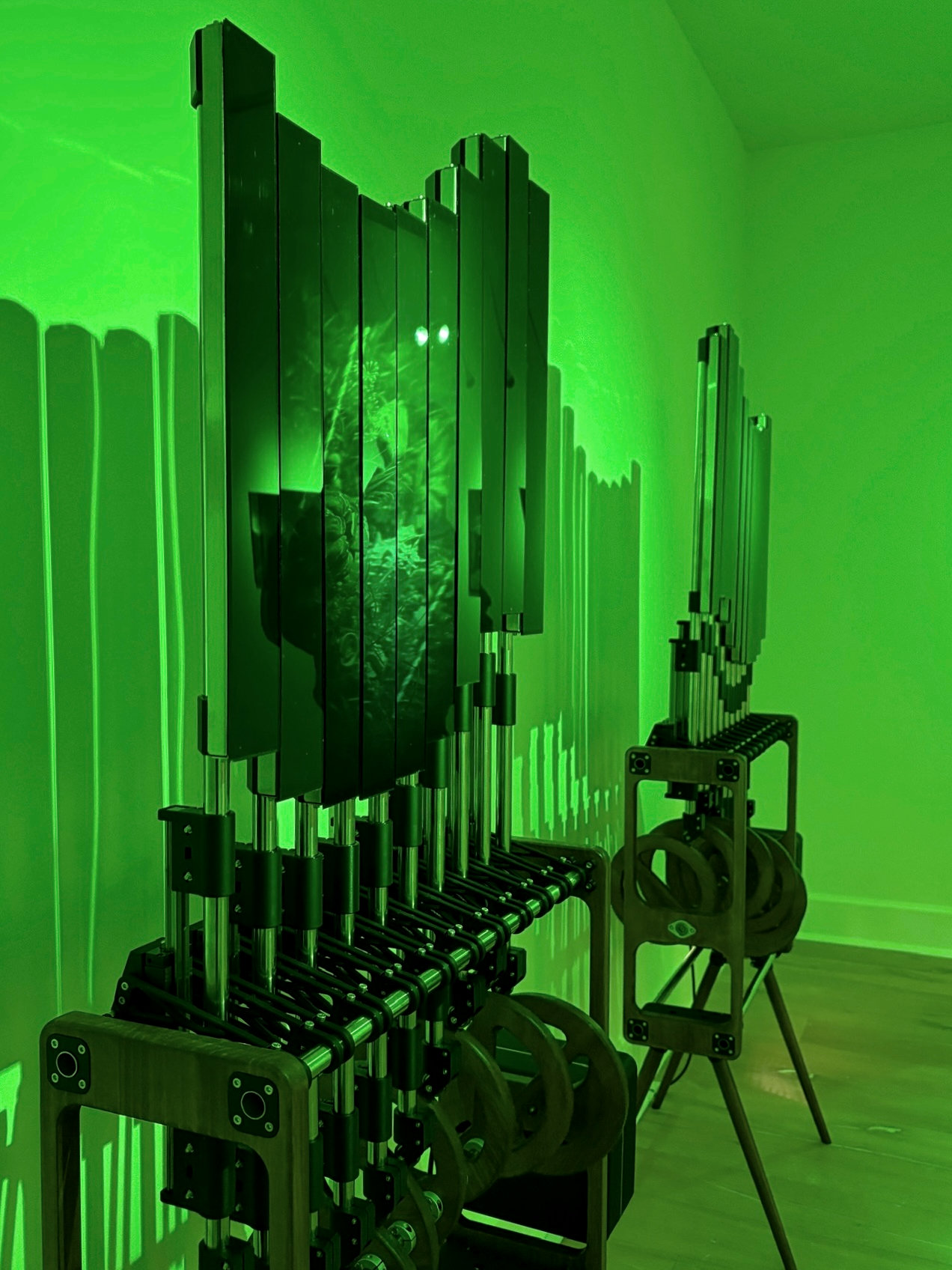
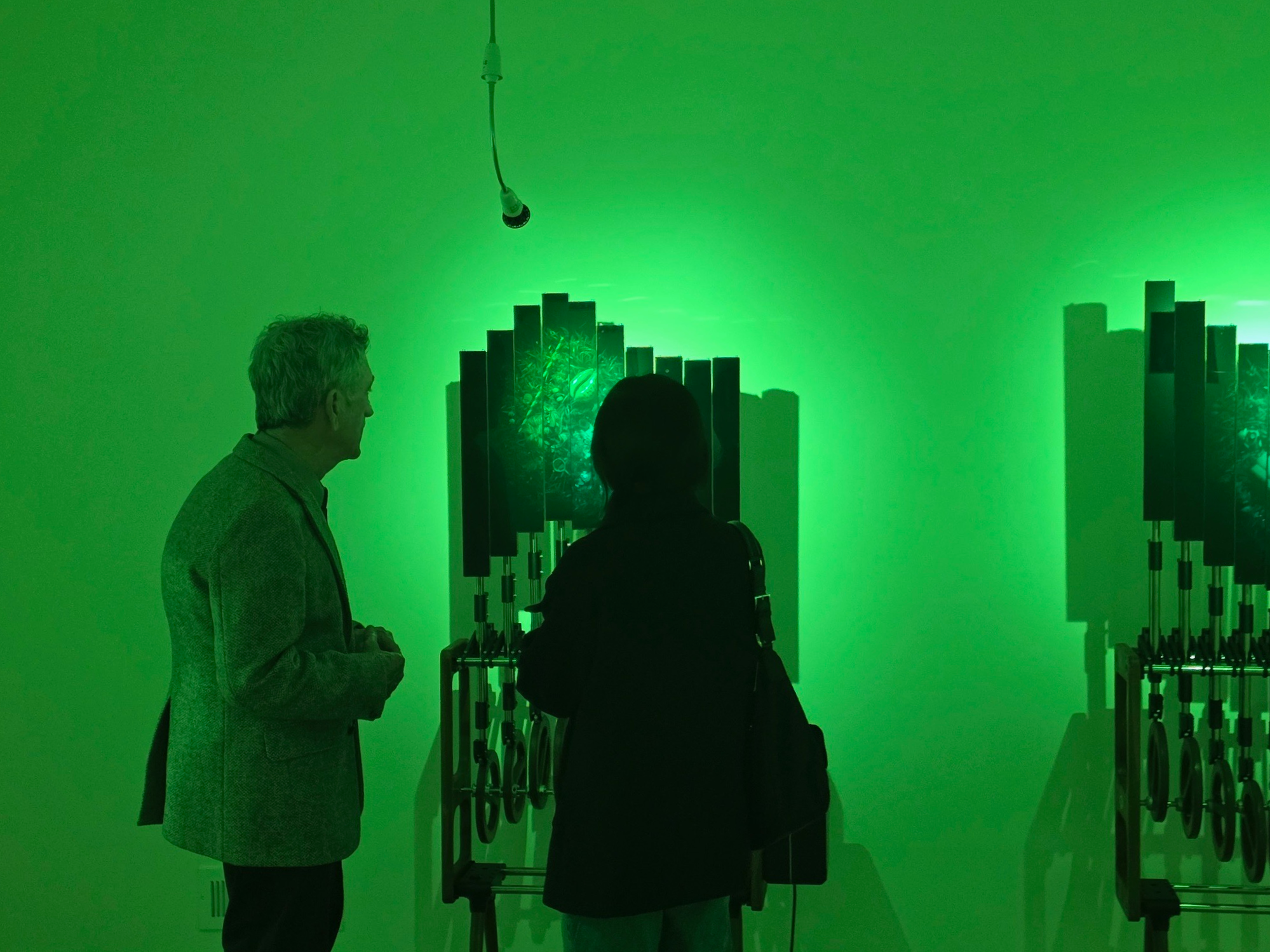
On March 5, 2026, Jungwuk Kim presented GREEN SCALE in Transcending Boundaries, an exhibition organized by the Korean Cultural Center Washington, D.C. Combining kinetic art with analog holography, the work gives holograms movement and time: images appear, change and disappear within the space itself.
Where the work begins
Since childhood, Kim has had amblyopia in one eye, which made it hard to tell reality from illusion. He has felt first-hand that the world we perceive through our eyes can be distorted at any moment.
Everything that seems obvious to someone is, in the end, an image made by light.
Jungwuk Kim
For him, holography is not simply a technical choice. An image that can be seen but not touched, that exists without physical substance, is the closest form to the world he has sensed all his life.
Boundaries in question
Reality and illusion — a hologram on a flat surface is experienced as another reality that resembles the real; viewers are led to ask, “Is what I am seeing real?” Stillness and motion — kinetic art has no finished form; every moment is a different work. Technology and art — technology becomes the language of the work itself, not a supporting tool.
In Kim’s own words from the exhibition text, images that change with the viewer’s position reveal a nature that is relational and variable rather than fixed. A hologram shows a different image depending on the angle, so the last variable that completes the work is the viewer.
Greenscale Illusion
We perceive the world through the errors of our senses: how we see color and how we sense depth are both constructed by our sensory organs. Kim offers no clear answer; instead he proposes ambiguity. The moment viewers realize that what looks three-dimensional is an illusion held inside a flat plane, they begin to question the other illusions they perceive.
Is what we perceive truly real — and is it really true that we exist?
Jungwuk Kim
Korean original
레인보우핀토스 소속 아티스트 김정욱은 지난 3월 5일, 주워싱턴한국문화원에서 주최한 전시 ‘경계 없는 시선 (Transcending Boundaries)’에서 키네틱 홀로그램 아트를 공개하며 ‘Green scale illusion’이라는 결론으로 자신만의 경계없는 시선에 대한 견해를 전시했습니다.
“누군가에게는 당연하게 보이는 모든 것은 결국 빛으로 만들어낸 이미지다.”
관찰자의 시점에 따라 변화하는 이미지들은 고정된 실체보다 관계적이고 가변적인 성질을 드러낸다.