Artist, JUNGWUK KIM
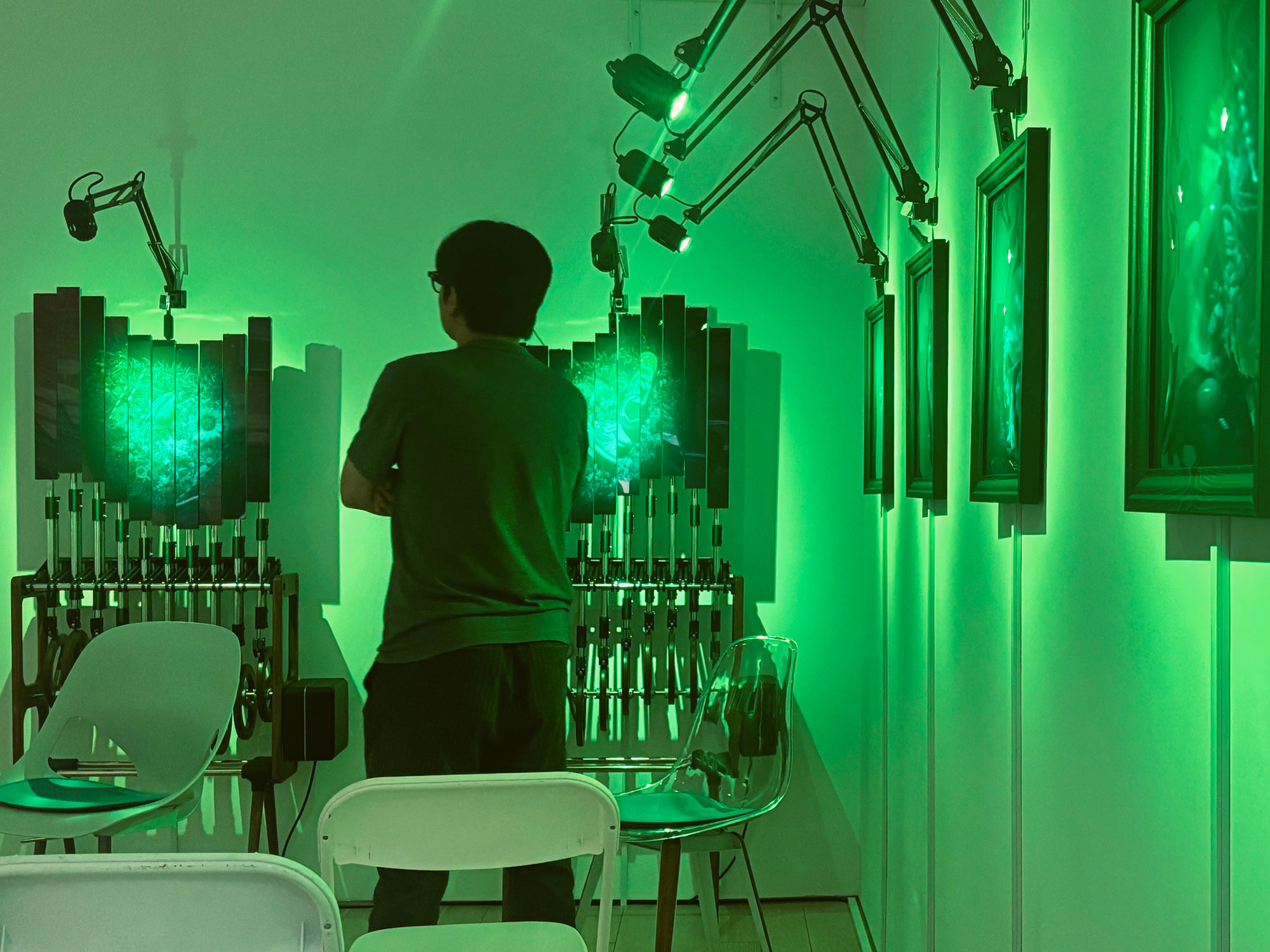
Jungwuk Kim is an artist who explores the boundary between reality and illusion through holography, recreating everyday objects with light to question the very act of “seeing.” Grounded in personal experiences of visual perception, his work stages the uncertainty of vision and the ways in which existence is revealed.
Statement
Hologram artist Jungwuk Kim uses holography as his medium, exploring long-standing ways of seeing and representation through everyday objects. Through repeated experiments that precisely control laser wavelengths, environmental conditions and the properties of materials, he has accumulated images over time. His congenital amblyopia — a personal visual experience in which reality and illusion coexisted — is the fundamental starting point of his work. He pays attention less to the essence of things than to the history and attitudes of vision: how things have been revealed and perceived. Through holograms he unsettles accumulated conventions of the image, quietly exposing the gap between what is seen and what has been believed.
Artist, Story
How it is seen
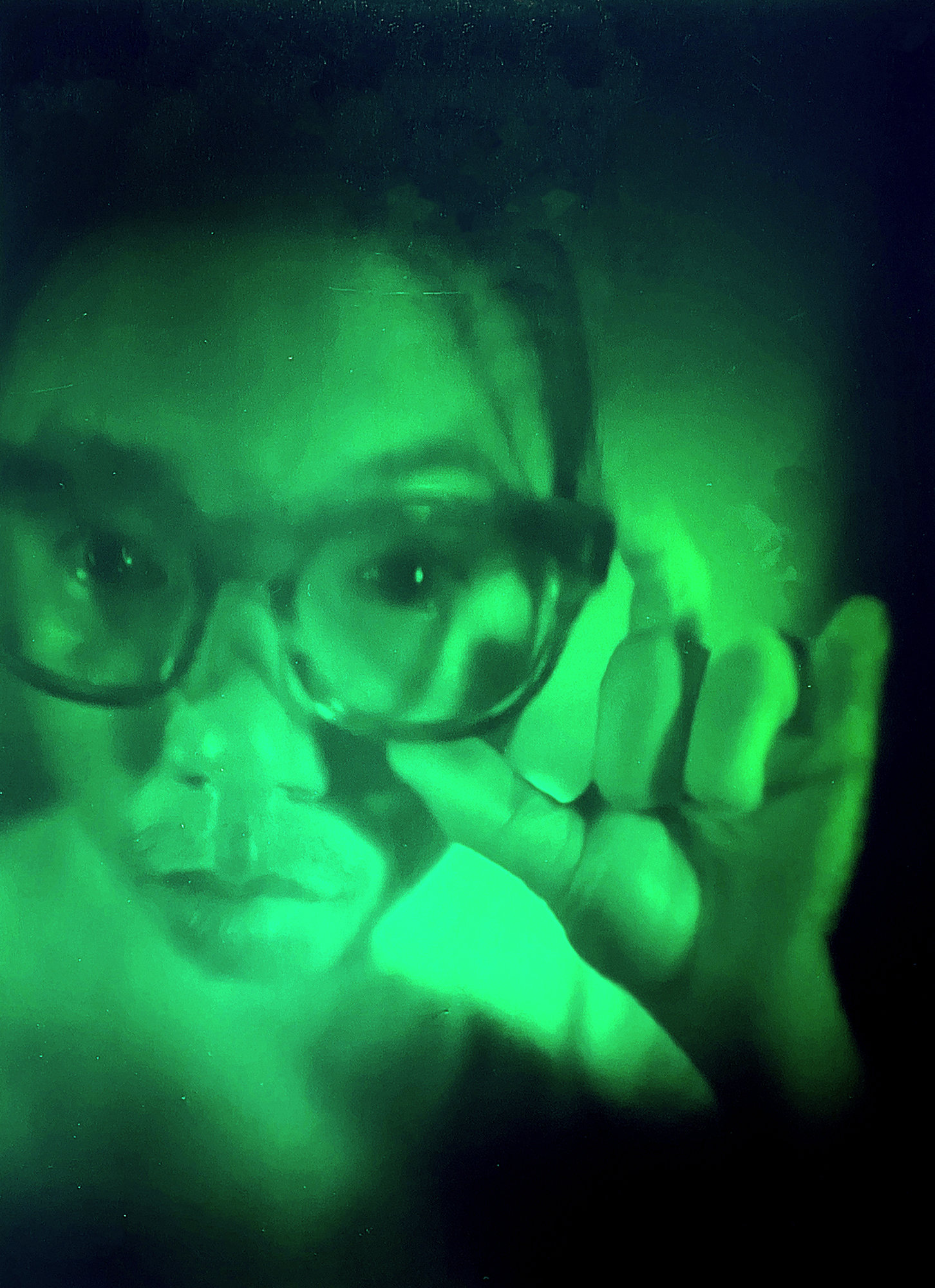
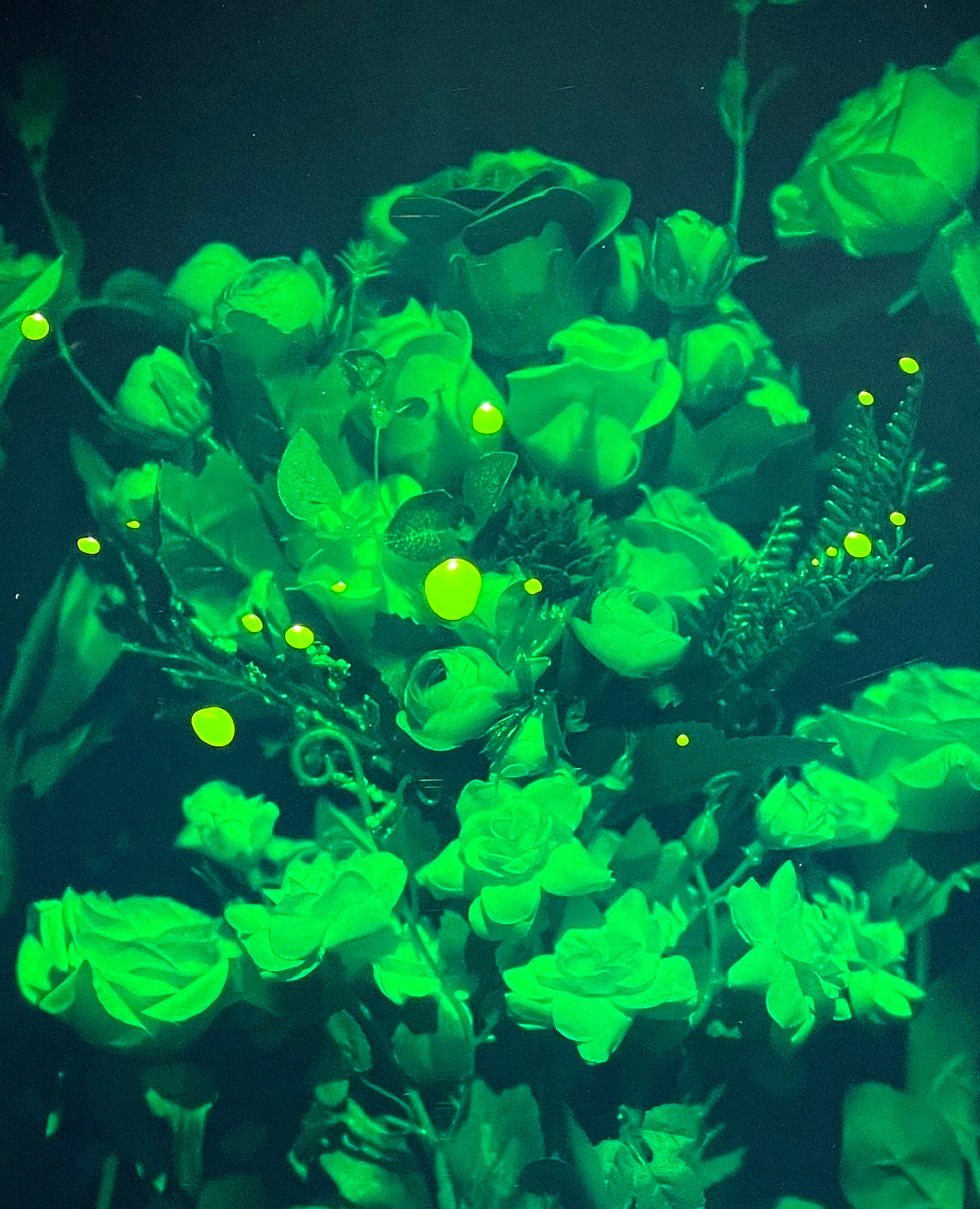
My work reproduces images through the particular qualities of holography as a medium, starting from utterly ordinary, conventional objects. I became more and more obsessed with the thrill of seeing everyday objects appear with dramatic realism through holography, and I have kept exploring how to reproduce these images more dramatically. For a hologram image to appear perfectly, every condition must be precisely intended — the wavelength and stability of the laser, humidity, temperature, the type of recording medium, the texture and color of the object. Even air convection affects stability.
Only after a long, patient wait for the film to dry can the finished holographic image be observed. Images processed this way convey everyday objects with great clarity, brightness and realism. Yet these well-rendered images come to look conventional: fixed images that seem utterly ordinary and self-evident.
Holographic objects made under conditions already decided by preconceptions about the image remain fixed prejudices — images that explain nothing further — and keep raising questions about the validity of representation. By contrast, images still in the middle of the holographic process appear differently under imperfect conditions. They take on an irrational, descriptive attitude, yet the same intention always lives inside them. The arbitrary, unexpected relationships that arise between object and image under slight changes of condition change the whole appearance of the object, and even make me question its identity.
Since childhood, my right eye has been amblyopic. It was congenital, so I honestly believed everyone had one eye that could not see. It was not completely blind — too weak to measure, but able to see a little — so seeing two overlapping images of an object, or an object duplicated into two, was everyday life. Illusions appeared as if they were there and not there. An illusion is said to be something that seems to exist but does not; to me, reality and illusion seemed to exist together. The things I saw often blurred reality and illusion, and this led me to think about existence.
It is not about the “what” of a thing — “what is it?” as its essence — but about the way a thing reveals its existence: how it is seen. Whether real or illusory, its appearance is revealed by light. Whatever its essence, it is seen through form and color, and on the basis of perspective.
With one amblyopic eye, I often confused reality and illusion. I saw overlapping or duplicated images, and with a weak sense of depth I often missed door handles or poured water onto the table instead of into the cup. These experiences naturally led me to think about how we see things. What matters is not the essence of a thing, but the way it reveals its existence — how it is seen. Real or illusory, what we see is revealed by light, shown through form and color: it is an image made by light.
That image protects the essence and changes; one day it may disappear together with the essence, or it may remain. I wanted to feel these visual phenomena directly and express them. Watching people be fascinated by parts of my work while also feeling the emptiness of realizing it was only an illusion — a trick — stimulates me greatly. What is seen is not everything; we must pay attention to the essence, whether in the chaos of human relationships or in vain speculation about an uncertain future. It moves me from vanity toward being faithful to the present, trusting results that have causes, and immersing myself completely in planning, more concretely, the world I live in and must move forward into.
Holography is an attractive medium that stimulates me further and keeps me immersed. I work with one question: how can I use this medium to realize more realistic images, full of vanity, in a wide range of colors — and draw many different responses from the people who see them?
A hologram can be described as the result of recording a three-dimensional image using the interference of light that occurs when two laser beams meet. The word combines “holos” (whole) and “gram” (picture), meaning “recording the whole” — a technology that records all the information of a subject. If painting draws forms on a flat surface with lines and colors, holography shares that meaning: it records a three-dimensional form drawn from digital sources onto flat holographic film, and reproduces it.
What makes digital holograms different is that they create an illusion as if it truly exists, shown as a three-dimensional image. The illusory image drawn this way gives viewers an unusual visual experience.
Korean original
현재 홀로그램의 매체적 특성을 이용한 이미지 재현작업을 해오고 있고, 지극히 평범하고 관습적인 오브제들로부터 출발한다. 일상적인 오브제들이 홀로그래피 작업을 통해서 극적인 사실감으로 보여졌을때 느껴지는 짜릿함에서 더욱더 집착하게 되었고, 보여지게 되는 이미지들의 극적인 재현을 위해 끊임없이 탐구했다. 완벽하게 홀로그램 이미지가 보여지기 위해서는 레이져의 파장과 안정성, 습도, 온도, 매질의 종류, 오브제의 질감, 색상 등 이 모든 조건들이 정확히 의도되어야 하며, 심지어 안정성을 위해 공기의 대류 또한 영향이 있다.
인고의 시간을 거쳐 건조가 끝나면 비로소 완벽한 홀로그램상을 관찰할 수가 있는데, 그렇게 처리된 이미지들은 일상의 오브제를 굉장히 선명하고 밝은 이미지로 사실감을 전달한다. 하지만 이렇게 잘 표현된 오브제의 이미지들은 지극히 평범하고 당연하게 떠오르는 고정된 이미지로 관습적으로 보이게 된다.
이미지의 선입견으로 이미 결정된 조건의 홀로그램상 오브제들은 고정된 편견과 더이상 설명되지 않은 이미지로 재현적 이미지의 타당성에 대한 의문이 계속된다. 오히려 홀로그램 처리 과정 속의 이미지들은 적합하지 못한 조건에 따라 각기다른 모습으로 보여지게되고, 비합리적이며 설명적인 태도를 지니게 되지만 그 안에는 항상 같은 의도가 내재되어 있다. 약간의 조건변화와 의도된 상황속에서 오브제와 이미지간에 발생하는 임의적이고 예상을 뒤엎는 관계들은 오브제의 전체 모습을 변화시키고 정체성마저 고민하게 만든다.
작가는 어렸을 적부터 오른쪽 눈 시력이 약시였다. 태어나서부터 선천적으로 그런 상황이어서 사실 모든 이가 한 쪽 눈은 안보이는 줄 알았다. 완전히 안보이는 건 아니고 시력 측정이 불가한 정도지만 살짝 보이는 정도였기 때문에 물체를 볼 때 두 개의 화상이 겹쳐서 보이거나 물체가 복사되어 두 개로 보이게 하게 보는 것이 일상이었고 있는 듯 없는 듯 허상이 보였다. 실제로는 없지만 있는 것처럼 보이는 것이 허상이라고 하지만 나에게는 실재와 허상이 함께 존재하는 것처럼 보였다. 나에게 보이는 사물들은 언제나 실재와 허상을 헷갈리게 하는 순간이 많았고, 존재에 대한 고민으로 이어졌다.
사물의 본질로서의 ‘그것은 무엇인가’의 그 무엇에 관한 이야기가 아니라 사물이 드러내는 존재방식, 즉 어떻게 보여지느냐이다. 그것이 실재든 허상이든 보여지는 모습은 빛에 의해 드러나게 되고 그 본질이 어떻든 형태와 색채로 보여지게 되며 원근법을 근거로 보여지게 된다.
한 쪽 눈이 약시인 나에게 보이는 사물들은 언제나 실재와 허상을 헷갈리게 하는 순간이 많았고, 물체를 볼 때 두 개의 화상이 겹쳐서 보이거나 물체가 복사되어 두 개로 보이는 듯한 경우가 많았고, 원근에 대한 감각이 약해서 손잡이를 자주 놓치거나 컵이 아닌 테이블에 물을 쏟으면서 일어났던 경험들에 의해 자연스럽게 사물을 보는 시각에 대한 고민으로 이어졌다. 사물의 본질로서의 ‘그것은 무엇인가’의 그 무엇에 관한 이야기가 아니라 사물이 드러내는 존재 방식, 즉 어떻게 보여지느냐 이다. 그것이 실재든 허상이든 보여지는 모습은 빛에 의해 드러나게 되고 그 본질이 어떻든 형태와 색채로 보여지게 되며 그것은 빛이 만들어낸 이미지이다.
그것은 본질을 보호하고 변화하며, 언젠가는 본질과 함께 사라져 버리기도 하지만 남겨지기도 한다. 이러한 시각적인 현상들을 직접적으로 느끼며 표현하고 싶었고 사람들이 내 작품을 보면서 어떤 부분에선 신기해 하면서도 사실 그것은 그냥 허상이고 속임수였다는 허무함을 동시에 느끼는 모습들이 나에게 많은 자극이 된다. 절대적으로 보이는 것이 다가 아니라 그 본질에 대해서 주목해야 하고 그것이 다양한 인간관계에서의 혼돈이든 불확실한 미래에 대한 허망한 추측이든 허영심이 가득했던 모습에서 현재에 충실하고 원인이 있는 결과를 신뢰하며, 지금 내가 살아가고 앞으로 나아가야 할 세상을 좀 더 구체적으로 기획하고 더 나은 결과를 만들기 위해 수단과 방법을 가리지 않고 몰입하게 만든다.
홀로그램이라는 매체는 그러한 나를 더욱 더 자극하고 계속해서 몰입하게 만드는 매력적 매체이다. 이 매체를 이용해서 어떻게 하면 더 사실적이고 다양한 컬러를 바탕으로 허영심 가득한 이미지들을 구현하고 작품을 보는 사람들로 하여금 다양한 반응을 이끌어 낼 수 있을까 하는 물음으로 작업한다.
홀로그램이란 두 개의 레이저광이 서로 만나 일으키는 빛의 간섭 효과를 이용해 3차원 입체 영상을 기록한 결과물이라고 할 수 있는데 완전하다는 ‘holos’와 그림이라는 ‘gram’의 합성어다. 그 뜻은 ‘전체를 기록하는 것’ 즉, 피사체에 대한 모든 정보를 기록하는 기술이라고 볼 수 있다. 평면상에 여러가지 선이나 색채를 이용해서 형상을 그려내는 것을 회화라고 한다면, 디지털 소스로 그려낸 입체형상을 평면 홀로그래피 필름에 기록하여 형상을 재생해 낸다는 점에서 그 뜻을 함께 할 수 있다고 생각한다.
다만 디지털 홀로그램이 다른 점은 마치 실재하고 있는 것과 같은 허상을 만들어 낸다는 것이고, 그것은 3차원 입체영상으로 보여지게 된다. 그렇게 해서 그려지게 되는 허상 이미지는 관람자로 하여금 색다른 시각 경험을 하게 한다.
Artist, CV
Ph.D. coursework completed, Immersive Content, Kwangwoon University (2025) · M.F.A., Korea National University of Arts (2021) · B.F.A., Western Painting, Keimyung University (2010)
Follow the studio in real time
From holographic recording and development to test processes and finished works — see the story of Jungwuk Kim and holography as it happens.
Studio
Works are produced with RAINBOWPINTOS MEDIA, a hologram studio for optical hologram recording, production and exhibition.

